2026-10-11 ·
Moss on Your Roof Is Causing Leaks (Here's the Fix)
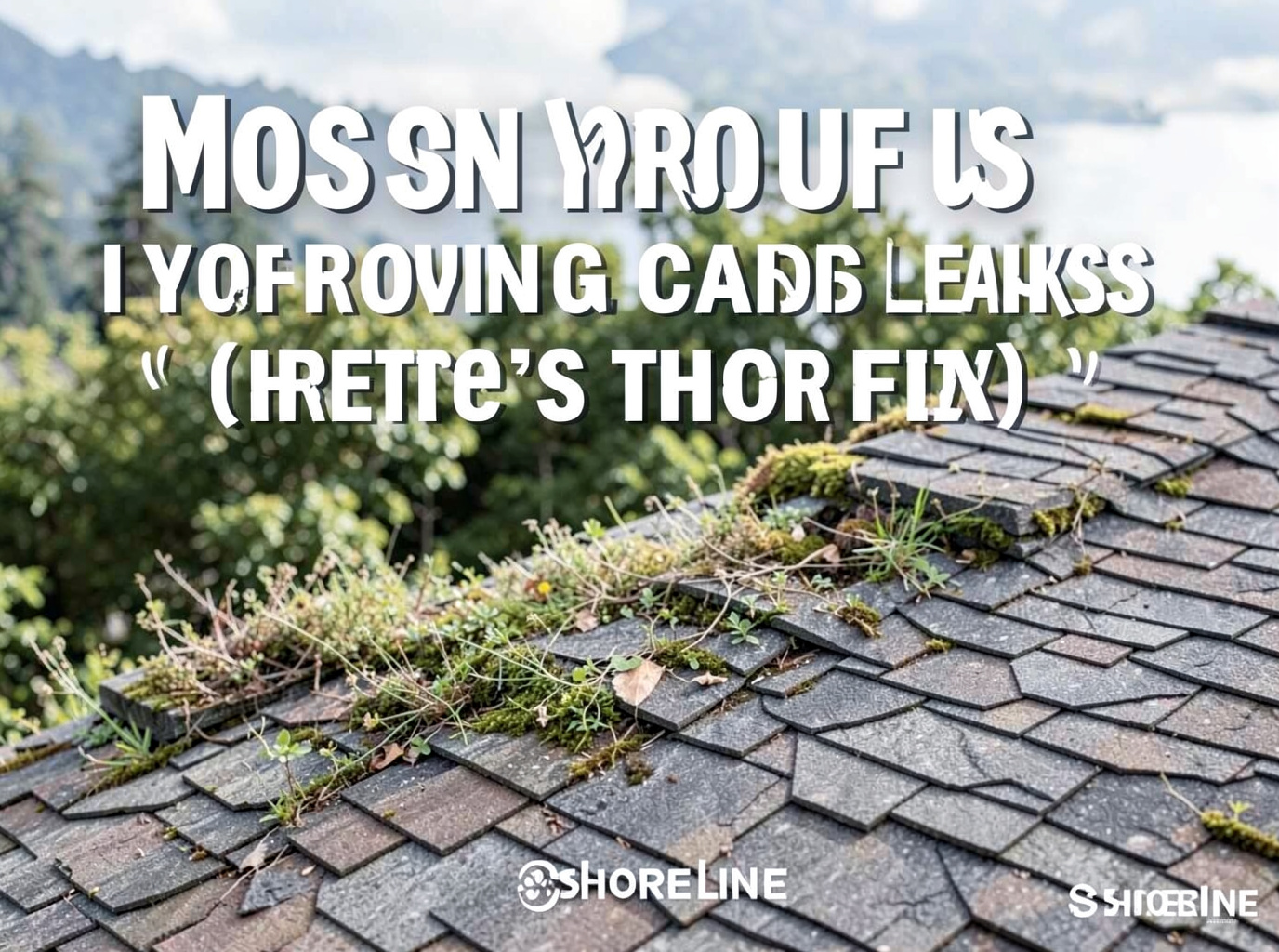
Moss on your roof in Shoreline holds moisture against shingles during mild wet winters moderated by Puget Sound and eventually lifts edges to allow water intrusion. The fix starts with careful removal that avoids further damage, followed by treatment to slow regrowth and a full inspection to catch any leaks that have already formed in neighborhoods such as Richmond Beach, Hillwood, and North City.
How Puget Sound Winters Drive Moss Growth on Local Roofs
Shoreline's climate features consistent winter rain that keeps roof surfaces damp for weeks at a time, especially on north-facing slopes common in older housing stock around Echo Lake and Ballinger. The moderate temperatures never fully dry the surface, allowing moss spores to take hold on asphalt shingles that are already fifteen to thirty years old in many Richmond Highlands and Ridgecrest homes. Wind patterns off the Sound carry additional moisture into valleys near Westminster and Aurora, where tree cover further shades roofs and reduces evaporation. These conditions differ from drier inland areas and mean moss colonies expand faster here than in Mountlake Terrace or Lake Forest Park. Homeowners notice dark green patches first near the ridge and gutters, where water lingers longest after each storm.
How Moss Creates Pathways for Roof Leak Repair
Once established, moss roots lift shingle tabs and trap debris that blocks drainage, directing water under the surface during heavy King County downpours. This trapped moisture softens underlayment and reaches decking, particularly around vents and valleys in homes near Shoreline Park and Hamlin Park. Over multiple seasons the problem spreads to flashings and pipe boots, turning a surface issue into interior water stains. Properties in The Highlands and Parkwood often see accelerated damage because their mature landscaping keeps roofs shaded and damp. Linking moss removal to a roof leak detection & inspection helps identify hidden entry points before they require emergency roof leak repair. The same wet conditions that feed moss also increase wind-driven rain damage, as covered in how rainstorms and windstorms damage roofs in Shoreline.
Safe Moss Removal Steps That Protect Against New Leaks
Begin by clearing loose debris with a soft-bristle brush from the ridge downward, working on dry days in spring or fall when temperatures stay above fifty degrees. Apply a moss-specific treatment that contains no bleach or high-pressure washing, which can strip granules and force water under shingles in Shoreline's older roofs. Rinse lightly with a garden hose set to low pressure, directing flow toward gutters that have already been cleared. After the surface dries, re-inspect valleys and penetrations for lifted edges that now need sealing. This sequence prevents the common mistake of pushing moss and water into seams during removal. Homeowners in North City and Ridgecrest who skip the inspection step often discover leaks weeks later when the next Puget Sound storm arrives.
Seasonal Prevention Practices for Shoreline Neighborhoods
After removal, schedule annual checks each spring and fall to catch new growth before it mats again. Trim overhanging branches that shade roofs in areas like Westminster and Aurora to increase sun exposure and drying time. Keep gutters flowing freely so water does not back up under the first course of shingles. A Shoreline seasonal roof maintenance checklist outlines timing that matches local rainfall patterns. For properties in Richmond Beach and Echo Lake where tree cover is dense, professional roof moss & algae removal every two to three years combined with zinc strip installation along the ridge slows regrowth without repeated chemical applications. Consistent attention to these details reduces the frequency of roof leak repair calls throughout King County.